Recova
An agent that puts money back where it belongs
Every business that delivers first and gets paid later ends up carrying collections. Recova carries it for them.
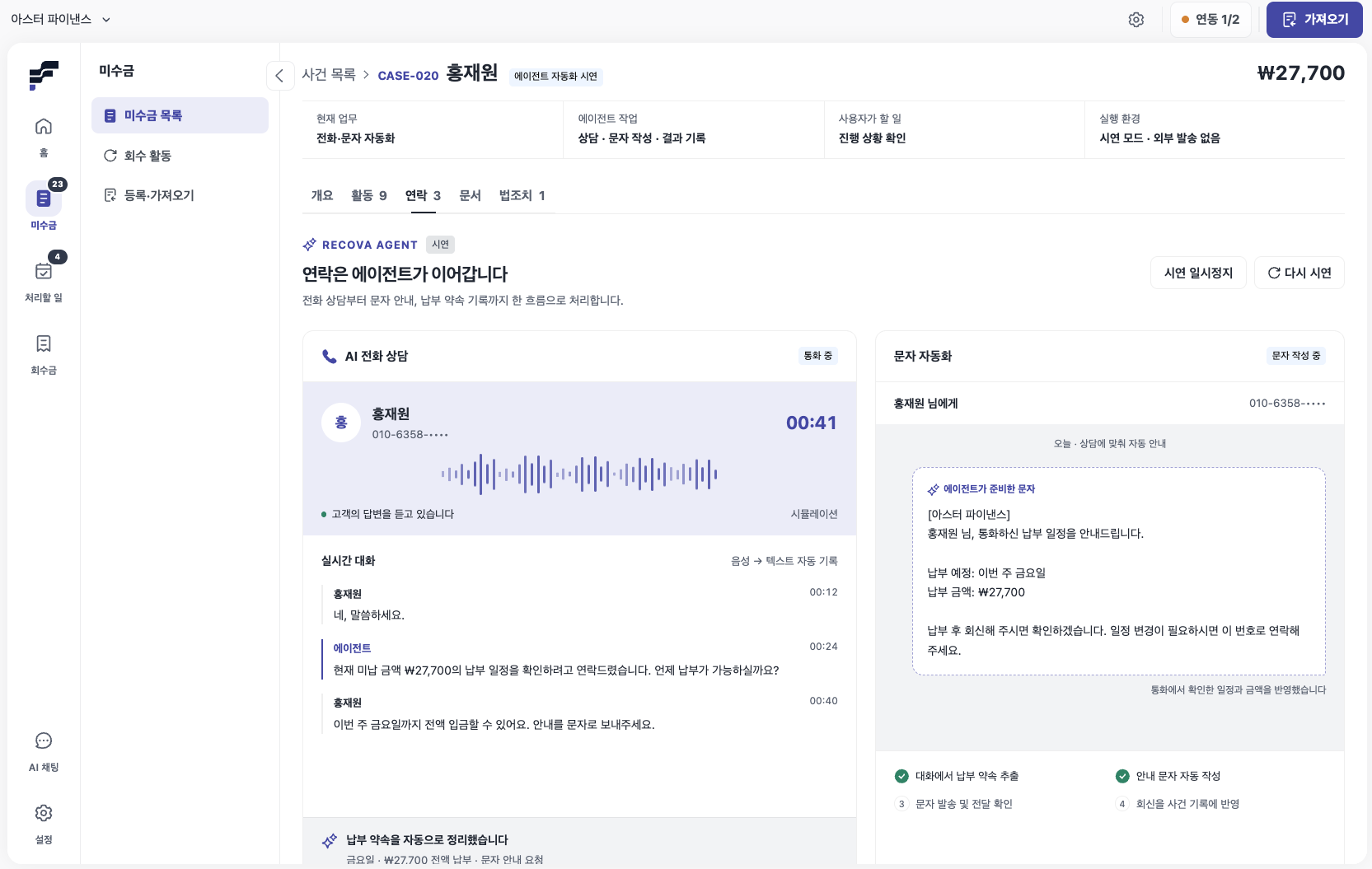
How it works
- 01
Contact
Recova calls and texts the debtor and gets the payment promise. “I’ll pay next week.”
- 02
Payment order
When the promise breaks, it gathers the contract, payment history and call records and drafts the payment order. A person approves before it goes to court.
- 03
Seizure
It traces where the debtor's assets are and prepares the seizure, using what we learned at the desk about which assets are worth it. A person approves again.
- 04
Repeat
The loop runs until the money comes back. A few approvals, and receivables that sat untouched start coming home.
Recova prepares. People decide. Nothing is sent to court, signed or paid without a person pressing approve.
Who it is for
Different industries. The same work.
- Lenders
- Loan principal
- Rental companies
- Rental fees
- Rent-a-car operators
- Accident deductibles, unreturned cars
- Distributors
- Trade credit
Proof so far
- ₩250B
- Receivables at the lender where we validated Recova
- 200s → 500s
- Debtors one collector could manage, internal test
- CES 2027
- Eureka Park, Seoul pavilion, Jan 6–9
Rent-a-car operators came to us inbound. A PoC is next.
Why us
“We’d like to work here.”
We could not learn collections by asking, so we asked a lender to hire us and did the job ourselves. When to call again, which asset is worth seizing, which claim is undisputed. That tacit knowledge is the moat, and it is what the agent runs on.
Where it goes
Korea first, with lenders and rent-a-car operators. Then the U.S., where rent-a-car receivables look a lot like ours.
Also in the U.S. Why not?